De-Risk Your Power Strategy
ULN combines medium-speed diesel generation with an engineered emissions-control architecture, on-site fuel storage, and the electrical integration a campus needs to operate it. This page covers the architecture in technical depth; for how it's applied on a project, see the data center and utility pages.
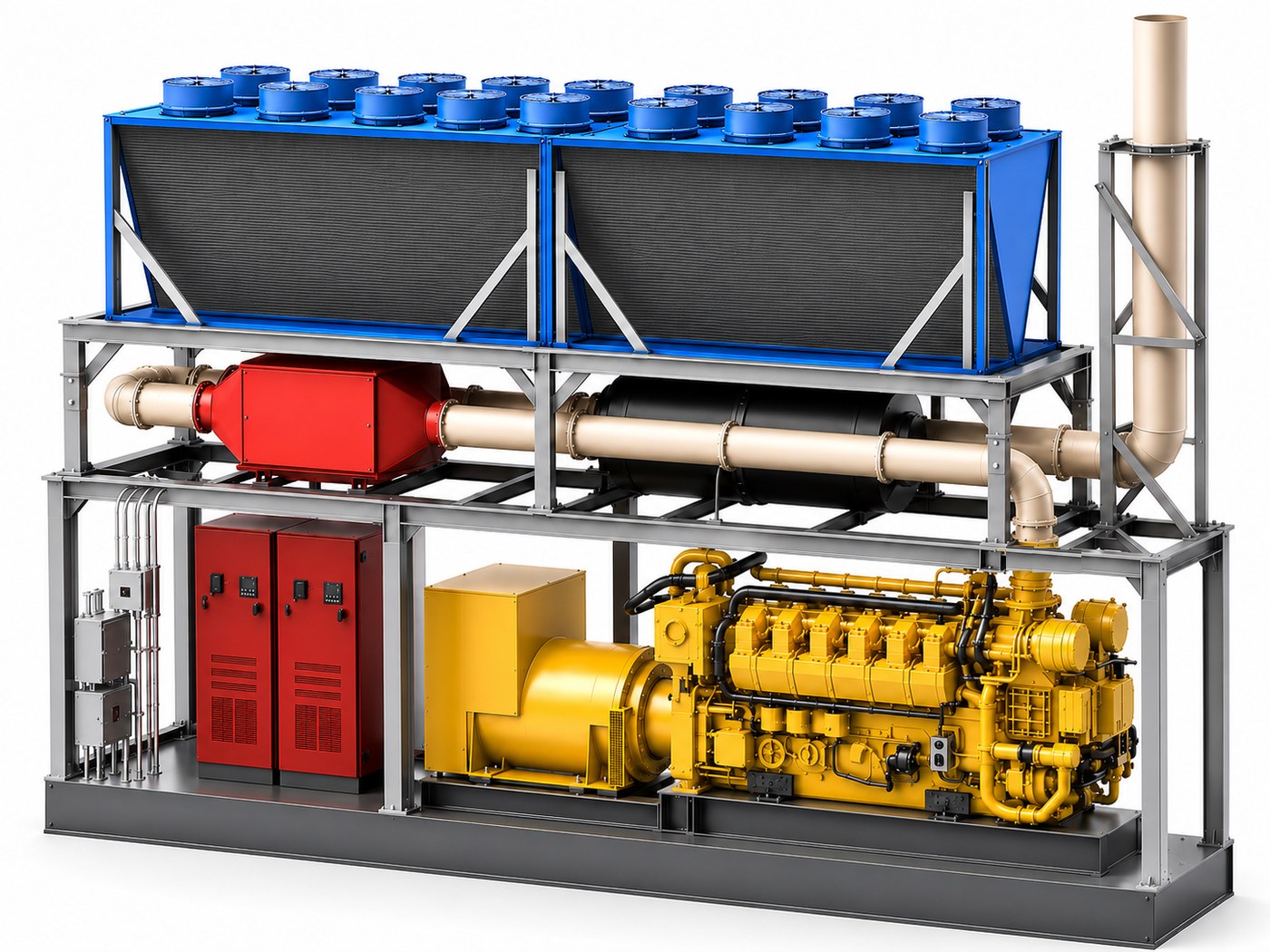
ULN Architecture Schematic
Illustrative block diagram. Not a substitute for approved one-line or P&ID drawings, which are available to qualified technical partners on request.
Generation architecture
The reference ULN platform is built around a medium-speed engine platform — Wabtec's 12V250 — operating at approximately 900 rpm, with approximately 3 MW of electrical output per unit, depending on configuration and rating. Units are deployed modularly, so campus-scale capacity is built up from multiple generation and emissions-control packages rather than a single oversized machine.
The platform is intended to support prime-rated dispatchable generation and backup power capability, subject to the specific equipment configuration and the approvals that apply to a given site and operating mode.
Engine-level emissions reduction
NOx — oxides of nitrogen formed during combustion — is addressed first at the engine itself, through an on-board exhaust gas recirculation (EGR) system that reduces the amount of NOx formed before exhaust ever reaches aftertreatment. This reduces the load placed on the downstream SCR system and is one half of the platform's two-stage approach.
This engine-level reduction is enough on its own for the medium-speed engine to achieve EPA Tier 4 Final certification — before exhaust ever reaches the low-temperature SCR stage described below.
Low-temperature SCR
Downstream of the engine, a low-temperature selective catalytic reduction (SCR) system uses aqueous ammonia, injected into the exhaust stream, to further reduce NOx before it exits the stack. This stage is additional to Tier 4 certification, not a requirement for it — that's already achieved at the engine, as above.
Together, the engine-level reduction and this SCR stage bring NOx output to sub-1 ppm — below the equivalent NOx emissions of a comparable natural gas reciprocating engine. This is the performance the "Ultra-Low NOx" name refers to.
Why low-temperature matters here: conventional SCR systems are often designed around the higher, steadier exhaust temperatures of continuous-duty applications. A low-temperature architecture is engineered to remain effective across the exhaust temperature ranges this platform actually sees in dispatchable, load-following operation — including startup and part-load conditions — rather than only at sustained high load.
Why that matters for site capacity: because it's engineered to begin dosing at lower exhaust temperatures than a traditional urea-based SCR, it can start reducing NOx earlier in the operating cycle. That matters for permitting — uncontrolled emissions, the emissions produced before aftertreatment engages, are what feed into a site's Potential to Emit (PTE) calculation, and PTE is a primary factor in how many generation units a site can be legally permitted to install. In practical terms, a campus's ultimately installable compute capacity is tied to its PTE, and earlier-dosing SCR is one of the levers that affects where that ceiling lands.
On-site fuel storage & replenishment
On-site liquid fuel storage lets the platform dispatch without depending on continuous natural gas pipeline delivery — an operating advantage during the same grid-constrained periods this platform is designed to help manage.
Storage capacity is sized per project and is not unlimited: runtime is a function of tank capacity, load, and a fuel replenishment plan built into normal operations, not a substitute for one.
Electrical integration & controls
Generation and switchgear integrate with the campus electrical system through controls engineered for the site's specific configuration — covering synchronization, load transfer, and, where applicable, the metering and communication a utility agreement requires for coordinated dispatch.
Operations & maintenance
The platform is built around diesel generation operating and maintenance practices that are already familiar to facilities and generation-maintenance teams, rather than introducing an unfamiliar operating model layered on top of the emissions-control architecture. The engineering resources most campuses retain for that equipment are, for the same reason, already familiar with this equipment family — which is what makes ULN one of the smallest operational and engineering step-changes available to an owner-operator adding on-site, dispatchable capacity.
Equipment capability vs. permitted operation
What the equipment is physically capable of and what it is authorized to do at a given site are two different questions. Operating modes — backup-only, prime/dispatchable, demand response, coordinated curtailment — depend on the site's air permits, interconnection agreement, and utility arrangements, in addition to the equipment's configuration. A capability described on this page is not a representation that a specific mode is pre-approved for any given site.
What's inside the enclosure
Generation, emissions control, and electrical integration ship as one packaged unit. Fuel storage is configured either as a side tank or a belly tank depending on site layout.
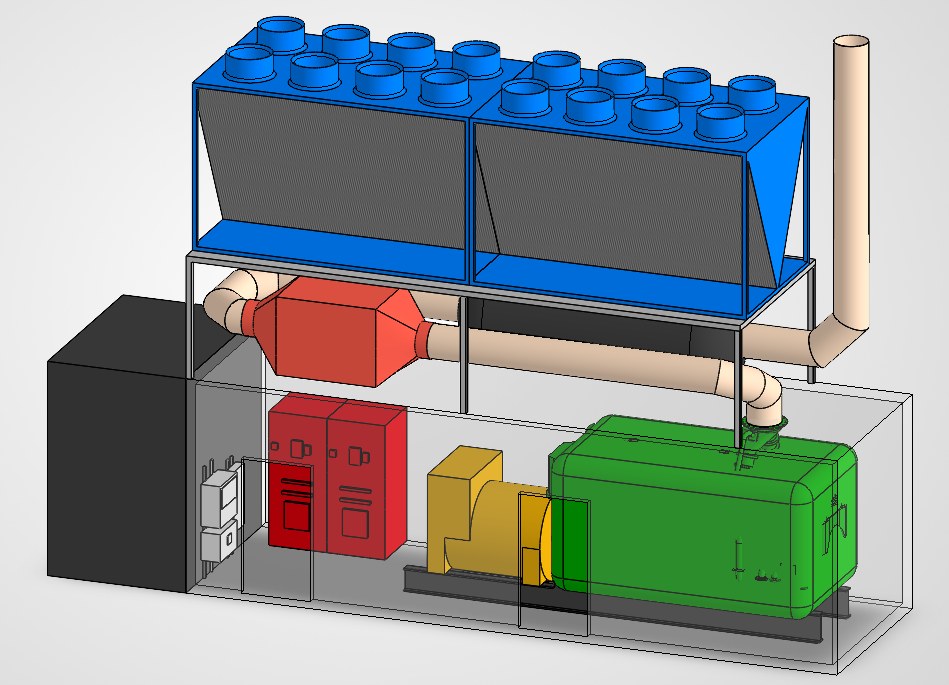
Side-tank configuration
Fuel storage mounted alongside the generation package. Footprint and fuel capacity are confirmed per project.
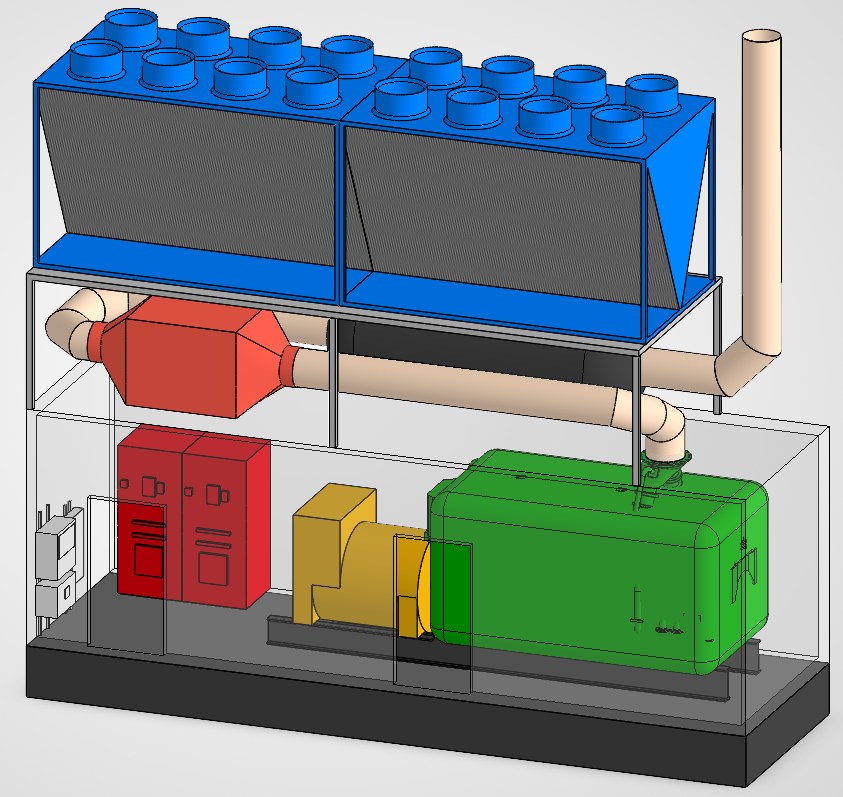
Belly-tank configuration
Fuel storage integrated beneath the generation package for a tighter footprint. Footprint and fuel capacity are confirmed per project.
Conceptual renderings for illustration only. Final equipment geometry, dimensions, and arrangement vary by project and may differ from what's shown here — see the specification sheet below, or request a technical brief for approved drawings.
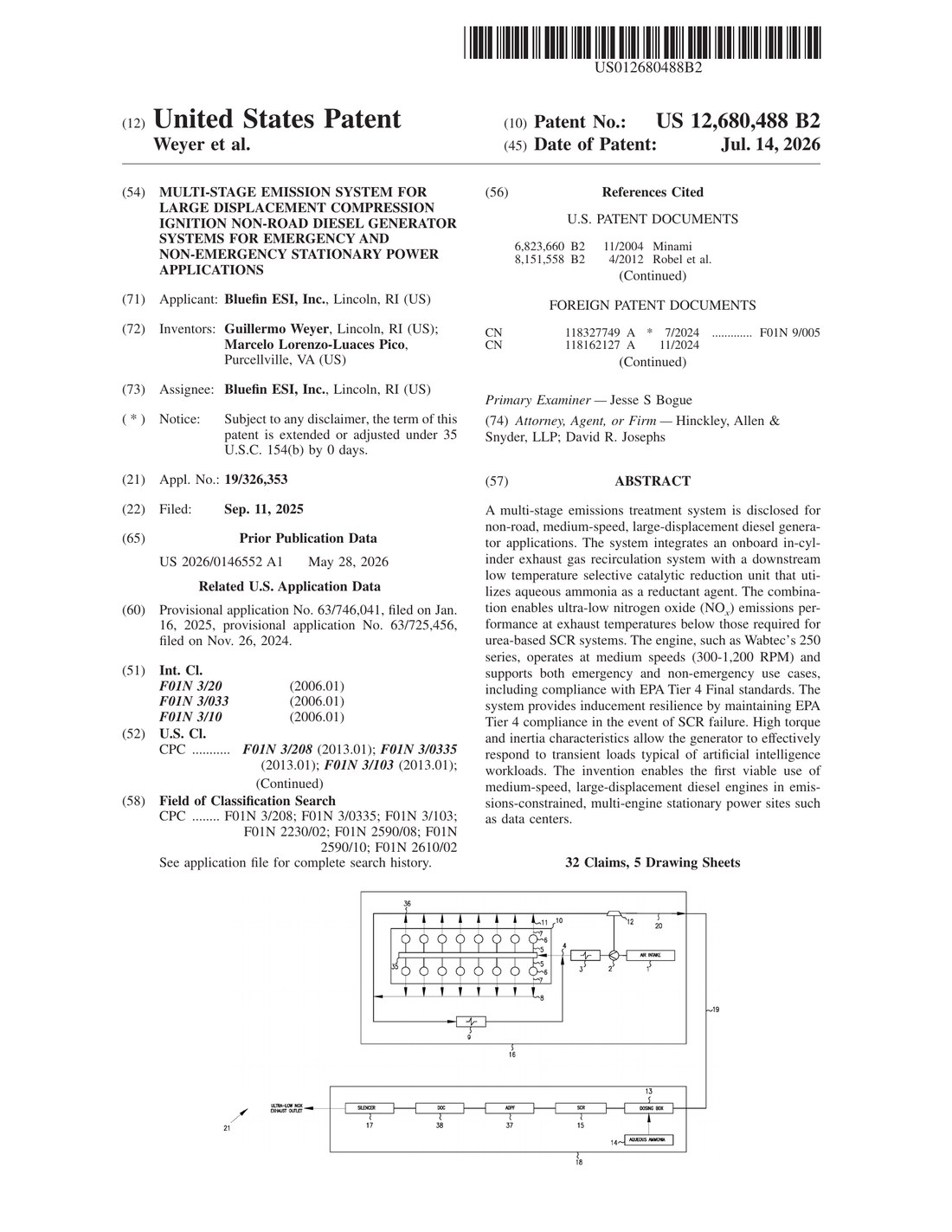
U.S. Patent No. 12,680,488 B2 — issued July 14, 2026
Specification sheet
This component is built to display Bluefin-approved values as they're confirmed. Fields without a verified value are intentionally left off the public page rather than filled with a placeholder figure.
Request the technical brief.
Detailed architecture drawings, emissions and acoustic data, and integration guidance are shared directly with engineering and infrastructure partners rather than posted as public downloads. Tell us about your project and we'll route the right materials to you.
Request a Technical Brief