Large-load growth with operational flexibility.
A participating data center campus can reduce its grid imports during coordinated periods using its own on-site generation — while continuing to operate. That's controllable, customer-sited demand you can plan around as large loads come online.
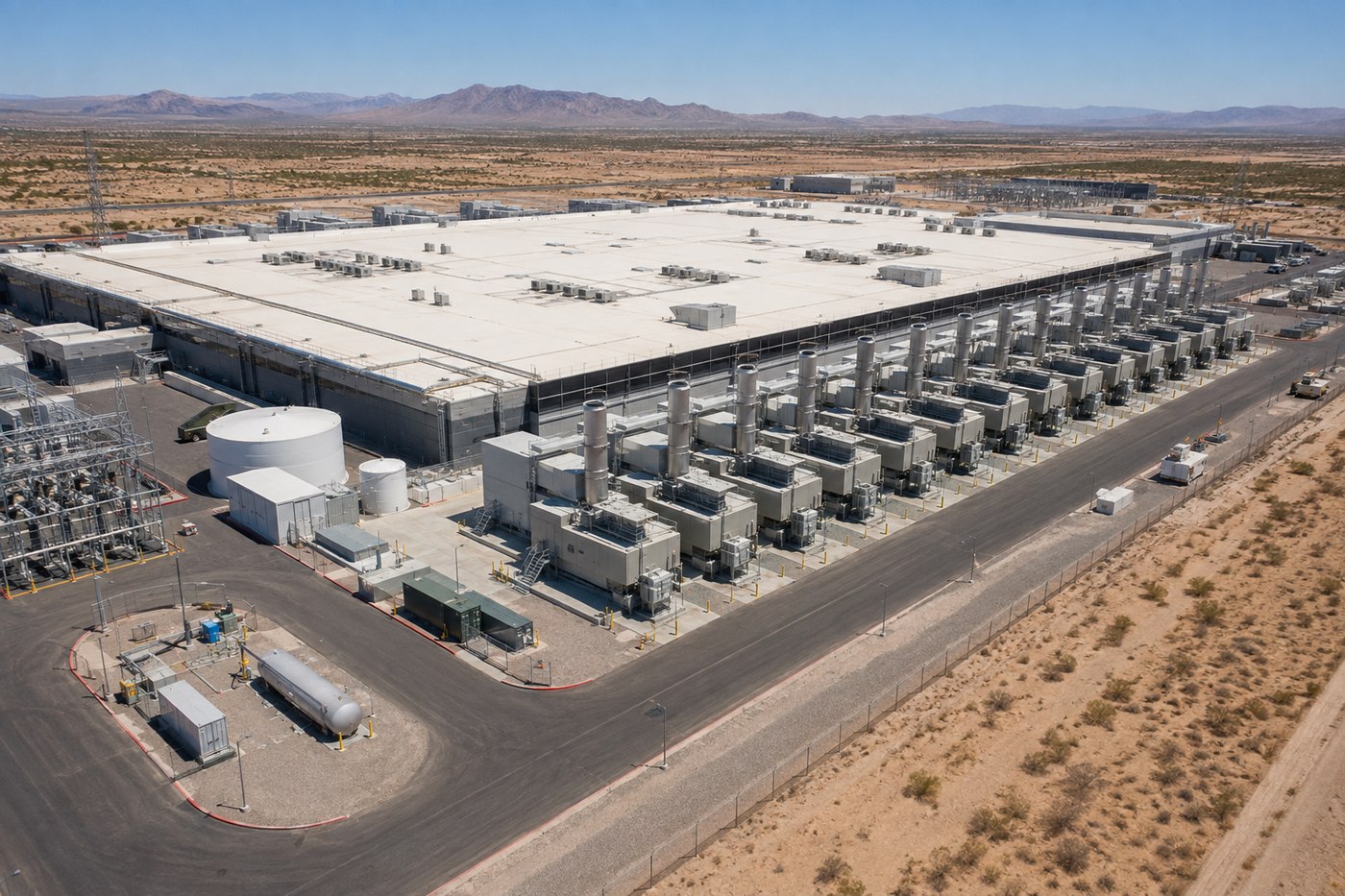 Representative campus — illustrative, not a Bluefin project photo
Customer-sited generation as a coordination tool.
Large data center loads are arriving on timelines that can outpace transmission and generation buildout in a given territory. A campus with on-site ULN generation gives you a customer whose demand is, in part, controllable — able to shift designated loads onto its own generation during periods you coordinate together.
That can support interconnecting large loads sooner, on interruptible or non-firm arrangements where your tariffs and programs allow it — evaluated case by case with your planning and interconnection teams.
It also reframes the cost conversation with the load-serving side of your business. A meaningful share of system and transmission cost is driven by a handful of peak hours each year — cost that's typically shared across the full ratepayer base. A large customer that shifts its own draw onto on-site generation during exactly those hours is reducing the load that sets those costs, which is a different position than simply adding to system peak. What that's worth in your specific rate structure depends on your own cost allocation and tariff design — that determination is yours to make, not Bluefin's to claim.
What coordinated dispatch involves
Customer-sited flexibility only works if it's dispatchable, verifiable, and planned for — not assumed. These are the elements a coordination agreement typically covers.
Coordination & dispatch
How and when curtailment is triggered — whether by utility signal, tariff schedule, or a pre-agreed set of grid conditions — is defined in the agreement between the utility and the customer, not assumed by the equipment.
Metering & controls
Metering and control integration confirm what's actually happening at the site — how much load is being served on-site versus imported — to the standard your programs and settlement processes require.
Operating duration & fuel planning
How long a campus can sustain reduced imports depends on on-site fuel storage capacity and its replenishment plan. This is a planned, finite duration — not indefinite backup — and is sized and disclosed per project.
Applicable utility agreements
Interconnection agreements, applicable tariffs, and any demand response or curtailment program terms govern how a site participates. Bluefin's role is to make the customer's generation capable of participating — the commercial and operating terms are between the customer and the utility.